Built by engineers who knew the 2am problem
We built Cordant after getting paged for incidents that should have resolved themselves. The tools and runbooks existed. What was missing was an agent that could connect them, reason across the problem, and act.
The team
The team has three co-founders spanning distributed systems reliability, ML-driven observability, and agent orchestration.

Eric Rosenthal
CEO & Co-Founder
Eric Rosenthal, CEO and Co-Founder, spent years building distributed-systems reliability tooling at large-scale internet infrastructure companies before founding Cordant. His work connected runbook automation with on-call operational ergonomics. He designs for graceful failure and autonomous recovery, a goal that anchors Cordant's architecture.

Priya Mehta
CTO & Co-Founder
Priya Mehta, CTO and Co-Founder, specializes in applying ML to production observability systems. She led platform engineering at a large logistics software company, building the anomaly detection pipeline that became Cordant's core diagnostic engine. She has deep experience bridging ML model output and actionable incident response.
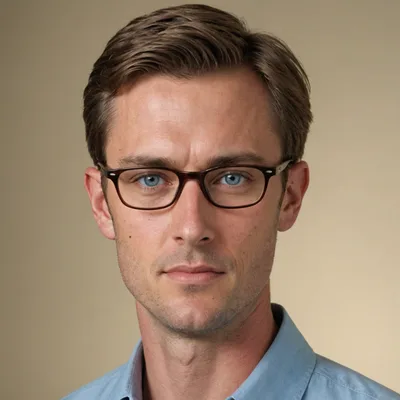
Jordan Kessler
Head of Engineering
Jordan Kessler, Head of Engineering, built platform-engineering infrastructure at scale across two developer-tooling companies before joining Cordant. He specializes in agent orchestration, designing systems in which multiple autonomous components cooperate without interfering. At Cordant, he owns the execution layer coordinating detection, diagnosis, and remediation actions.
What we believe
The principles behind how we build Cordant and operate as a team.
Observe to improve
You cannot improve what you cannot see. Cordant treats complete observability as a requirement, not an extra. Every diagnostic conclusion the agent reaches is auditable and explainable.
Autonomy earns trust
Autonomous action follows demonstrated accuracy. Cordant builds confidence in stages: it diagnoses first, proposes actions next, then executes with explicit operator approval at each capability tier.
Humans set the ceiling
Automation should extend a team's capacity without removing judgment from decisions that need it. Cordant pages people when a situation calls for human judgment. It handles the rest.
Built for operators
Cordant is designed by engineers who have carried the on-call shift. Every interface, alert format, and runbook trigger reflects what an SRE needs at 2am, not what looks good in a demo.
Talk to the team
We are onboarding early-access customers and design partners. If you run infrastructure and want less on-call burden, reach out directly.